
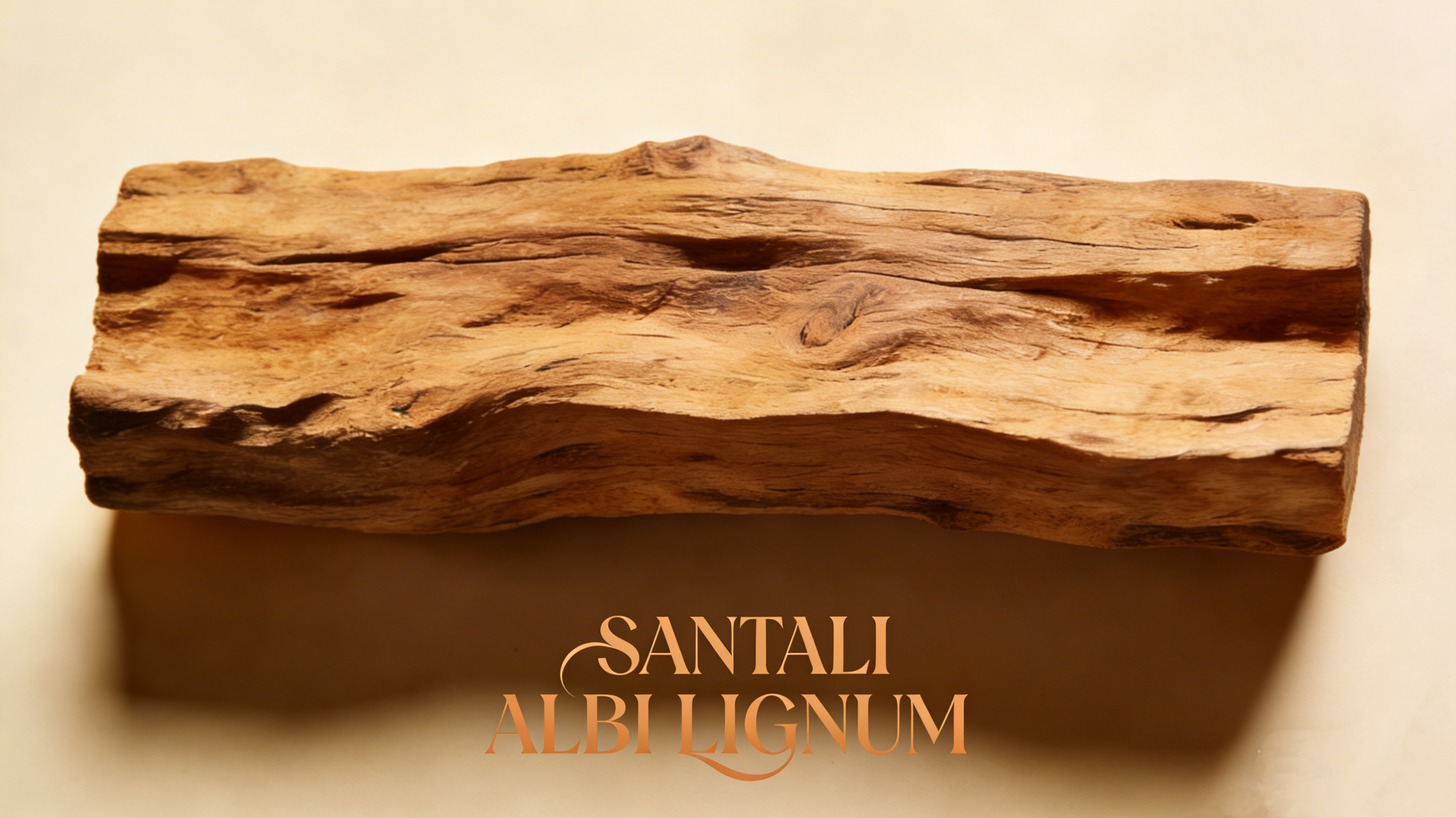
I.Base Origin Information:
Sandalwood, with the Latin name SANTALI ALBI LIGNUM, is the heartwood of the trunk of the sandalwood tree (Santalum album L.). This precious wood, which grows slowly and emits a rich, mellow fragrance, has been revered since ancient times in Eastern civilizations as a sacred material, holding an esteemed position in religious, cultural, and medicinal contexts. Since its inclusion in the Bencao Shiyi (Supplement to Materia Medica) of the Tang Dynasty, sandalwood has been recorded in medical texts as a key herb for regulating qi, harmonizing the stomach, and alleviating pain. The name "檀" (tán) originates from Sanskrit, meaning "to give" or "to bestow," as its aroma brings joy and calms the mind, earning it the title "gold among woods." [Discover our Sandalwood Herbal Bath Tea Bag] Sandalwood's elegant and long-lasting fragrance makes it an exceptionally rare aromatic medicinal resource.
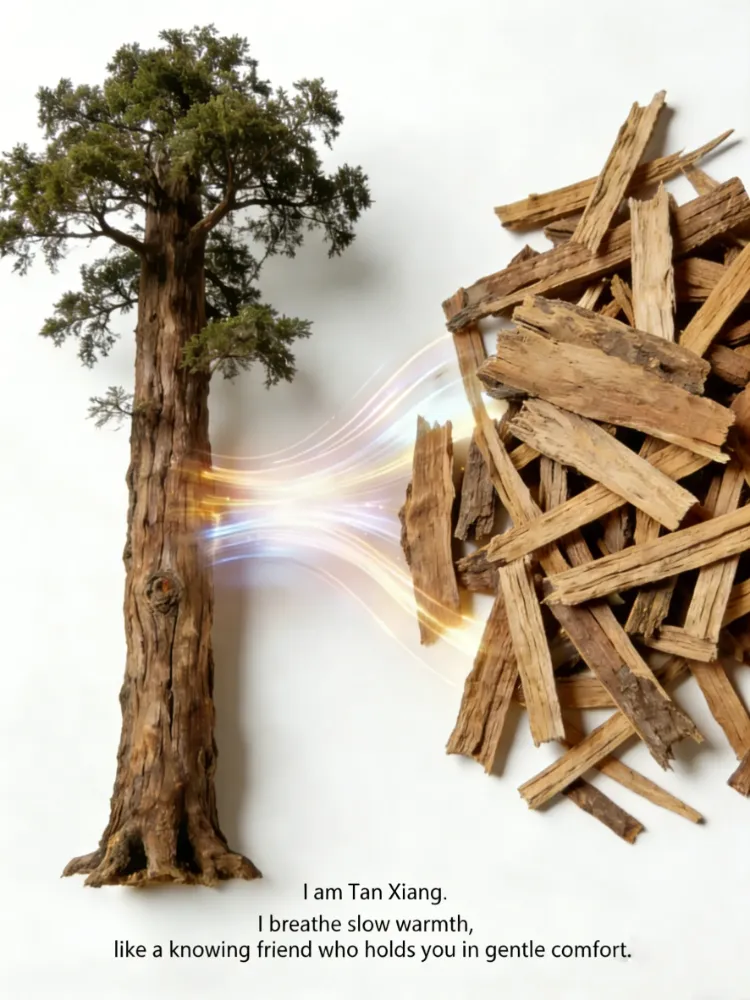
II. Authentic Production Area:
Sandalwood is cultivated in regions such as Guangdong, Hainan, Fujian, and Taiwan, China, where long-term introduction and domestication efforts have established large-scale cultivation bases. Among these, cultivated sandalwood from Zhanjiang in Guangdong, Sanya in Hainan, and Xiamen in Fujian is recognized for its superior quality. After decades of dedicated research, Chinese scientists have successfully unraveled the scientific principles governing its parasitic growth: [Learn About Our Research & Heritage]
Scientific Understanding of Semi-Parasitic Ecology: Sandalwood is an obligate hemiparasitic plant whose roots must attach to the roots of specific "host plants" (such as periwinkle, Albizia, or flame tree) to form haustoria, through which it obtains partial water and nutrients. The key to China's successful introduction lies in the "scientific selection and arrangement of host plants." Through long-term experimentation, native tree species that grow rapidly, exhibit strong resistance, and possess good root compatibility with sandalwood have been selected as hosts. These are interplanted in scientifically determined ratios (typically 1:3 to 1:5) to create a stable, symbiotic forest ecosystem.
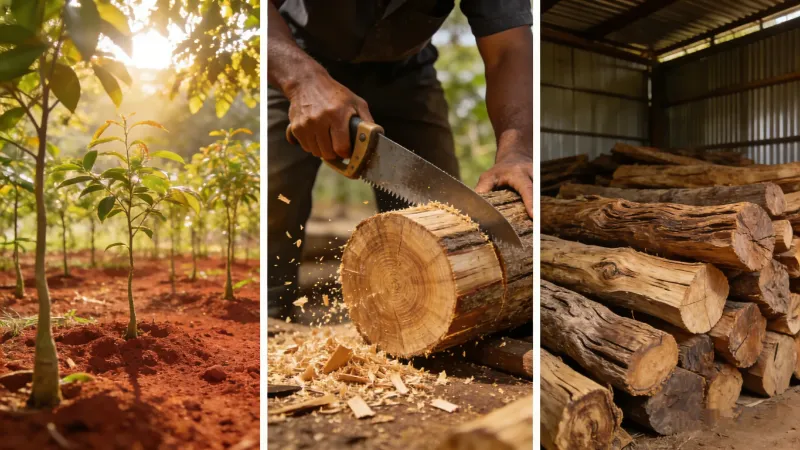
Precise Adaptation to Climate and Soil: Introduction areas are carefully chosen within the northern tropical and southern subtropical climate zones, with average annual temperatures of 22–26°C, no frost, and annual precipitation of 1,200–2,000 mm. Sandalwood thrives in sunlight and is intolerant to waterlogging. Cultivation areas are mostly gentle slopes with good drainage, ideally with loose, fertile, slightly acidic red soil or sandy loam. Ample sunlight and significant diurnal temperature variations are essential for the heartwood to develop high concentrations of aromatic oils.
Growth Cycle and Sustainable Harvesting: Sandalwood grows extremely slowly, typically requiring 15–20 years of cultivation before its heartwood accumulates sufficient aromatic oils to attain medicinal value. China employs "dwarfing and dense planting combined with ecological tending" techniques to promote trunk thickening. Harvesting follows sustainable principles: typically, only selected plants over 25 years of age are felled, or the heartwood portion of the trunk is selectively harvested while retaining the sapwood to facilitate regeneration. After harvesting, the heartwood is split into small pieces and naturally air-dried in cool, well-ventilated areas for several years, allowing its aroma to mellow and deepen. Modern processing utilizes "low-temperature vacuum drying technology" to maximize the preservation of precious volatile components while controlling humidity.
III. Quality
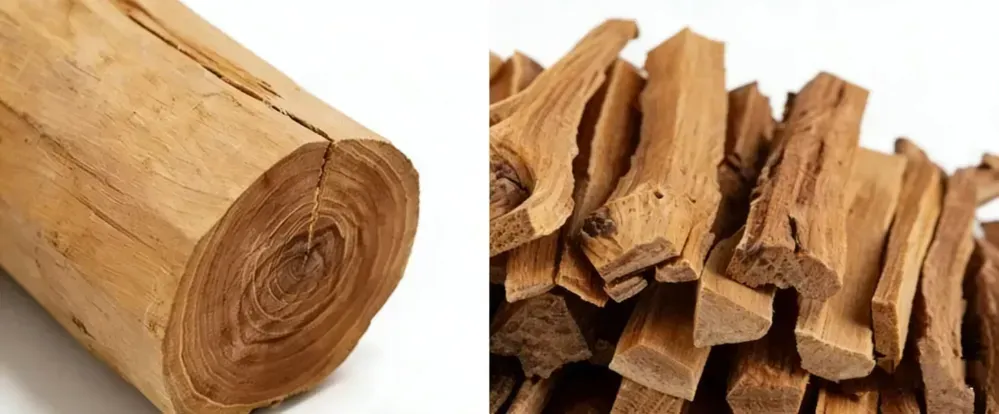
High-Quality Sandalwood: The heartwood appears as cylindrical or slightly flattened segments. The surface is pale yellowish-brown or yellowish-white, deepening in color over time with aging. It has a dense, hard, and heavy texture (sinks immediately in water). Longitudinal sections display fine, elongated vertical grain patterns. The aroma is mellow, rich, and long-lasting, with a distinctive blend of sweetness, creamy notes, and woody tones, offering complex layers that soothe and calm the mind. When burned, the smoke is delicate and elegant, with a strong, diffusive fragrance. The taste is slightly bitter. When touched, the surface feels smooth and fine with a pronounced oily texture. [Explore our premium sandalwood herbal bath tea bags]
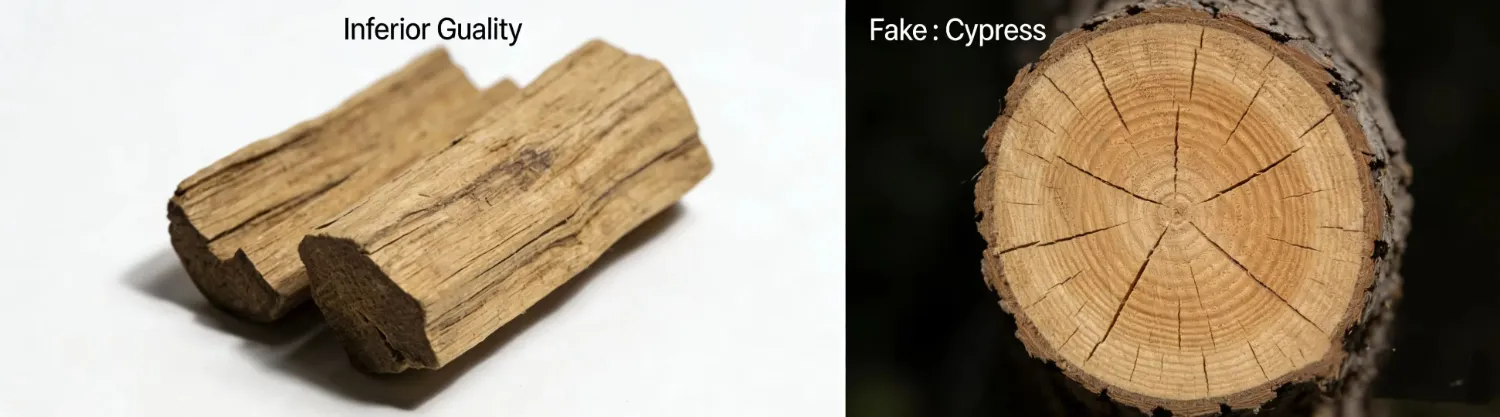
Ordinary/Inferior Sandalwood: The color is pale, dull, or lacks luster, often consisting of sapwood or immature wood. The texture is relatively light, and it may float or partially float in water. The grain is coarse or indistinct. The aroma is faint, short-lived, or accompanied by sharp, sour, musty, or chemical-like odors. When burned, the smoke is turbid and the smell is pungent. The taste is bland or absent. The texture feels dry, rough, or coarse to the touch.
[How to determine the quality of adaptogen bath soak?]
IV. Main Chemical Components
Sesquiterpene Alcohols (Primarily Santalol): These are the main constituents responsible for sandalwood's characteristic sweet, mellow, and woody aroma. They also serve as the material basis for its core pharmacological effects, such as sedative, anxiolytic, anti-inflammatory, and antibacterial properties. These compounds are chemically stable and exhibit long-lasting fragrance retention.
Other Sesquiterpenes and Aldehyde/Ketone Compounds: These contribute to the layered complexity of its aroma, including smoky nuances and subtle creamy notes. They also offer synergistic auxiliary effects, such as skin repair and anti-aging benefits.
V.Core Efficacy
Sandalwood is warm in nature, pungent in taste, and enters the spleen, stomach, heart, and lung meridians. Its core functions are "promoting qi flow and warming the middle, stimulating appetite and relieving pain, calming the mind, and fostering tranquility." With its rich, deeply penetrating fragrance, sandalwood excels at dispersing and unblocking, offering a gentle and non-irritating warmth. When used externally in "herbal bath sachets," its aromatic essence, aided by the heat and steam of the water, is efficiently absorbed through both the respiratory system and the skin, delivering a unique dual-nurturing effect on the body and mind.
Promoting Qi Flow and Warming the Middle, Relieving Cold Pain in the Chest and Abdomen:
Effective for cold pain, distension, and fullness in the chest, diaphragm, stomach, and abdomen caused by cold stagnation and qi obstruction, as well as for hiccups and vomiting. Its warm aromatic volatile oils are rapidly released in hot water and absorbed through the skin, gently warming and unblocking the meridians. This helps disperse cold and stagnant qi accumulated in the chest and abdomen, promoting local blood and qi circulation, and effectively alleviating cramps and cold pain resulting from exposure to cold or impaired qi dynamics.
Calming the Heart and Tranquilizing the Mind, Facilitating Deep Relaxation and Sleep:
Its elegant, grounding fragrance possesses remarkable sedative and calming effects, alleviating anxiety and clearing mental clutter. During bathing, the fragrant steam of sandalwood acts directly on the limbic system and hypothalamus through the olfactory pathway, swiftly reducing cortisol levels and inducing alpha brain waves to produce a profound sense of calm and relaxation. For those with racing thoughts, mental tension, or difficulty falling asleep, a sandalwood herbal bath creates a sacred and tranquil ritual space, guiding the body and mind into a harmonious state conducive to sleep.
Aromatic Purification, Cleansing Body, Mind, and Environment:
Capable of purifying the air, eliminating odors, and fostering a serene atmosphere. When used in herbal baths, its aromatic molecules not only cleanse the skin but also evoke a psychological sense of purification and elevation, washing away the fatigue and worries of the day and offering a refreshing experience for both body and mind.