I.Base Origin Information:
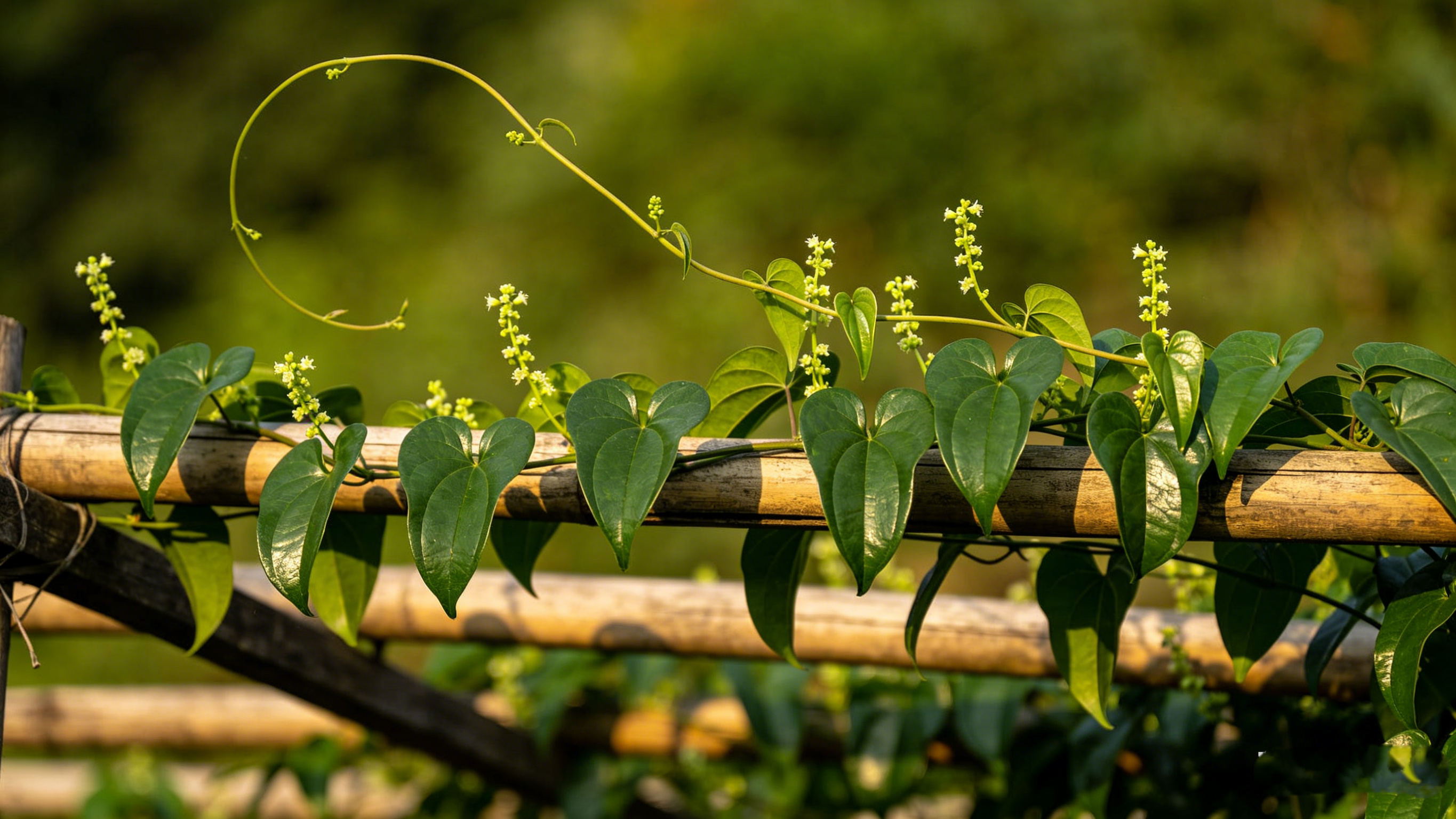
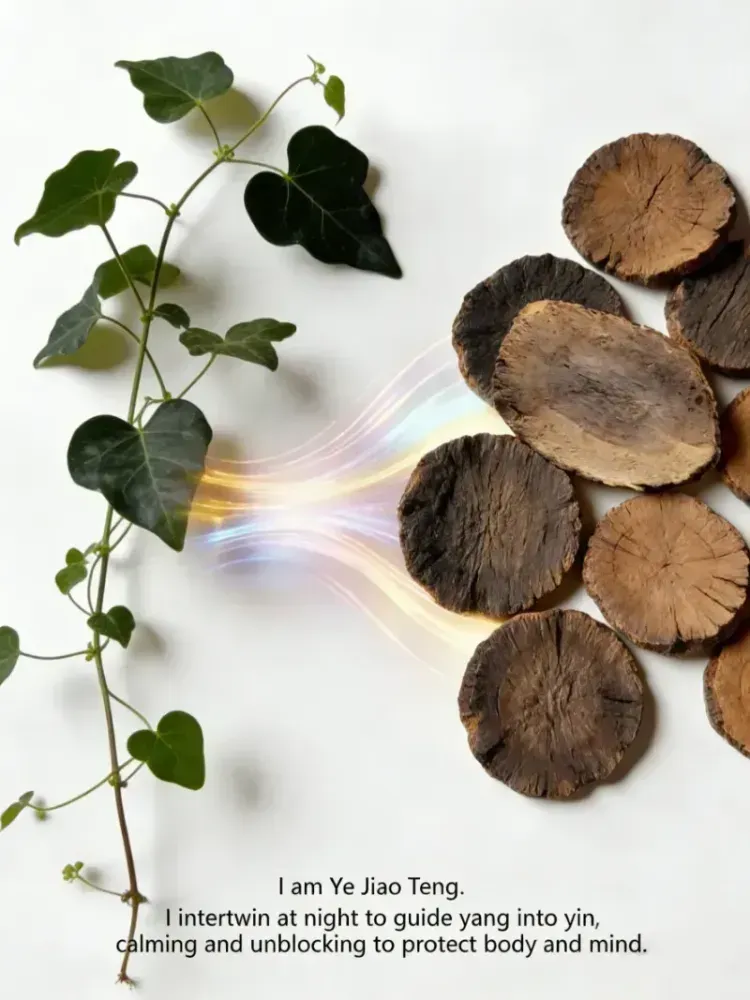
Tuber Fleeceflower Stem, also known as Fleeceflower Root, with the pharmaceutical Latin name POLYGONI MULTIFLORI CAULIS, is the dried vine stem of Polygonum multiflorum Thunb., a plant belonging to the Polygonaceae family. This climbing vine shares the same origin but differs in use from the liver and kidney tonifying He Shou Wu—its tuberous root is the renowned He Shou Wu, while its vine stem enters the heart and liver meridians, specializing in calming the spirit and dispelling wind. The name "Ye Jiao Teng" (Night-Blooming Stem) is quite legendary; it is said that its vines can automatically intertwine with each other at night, hence the name, implying its effect of "conducting yang into yin." Since being documented in the Original Meaning of the Classic of Materia Medica (Ben Jing Feng Yuan), Tuber Fleeceflower Stem, with its effects of nourishing the heart, calming the spirit, dispelling wind, and unblocking collaterals, has become a commonly used excellent herb for treating insomnia, excessive dreaming, blood deficiency body pain, rheumatic impediment pain, and skin itching.
View more introductions to Chinese medicinal herbs.
II. Authentic Production Area:
Tuber Fleeceflower Stem is widely distributed in East China, Central South China, as well as Hebei, Shanxi, Shaanxi, Gansu, Taiwan, Sichuan, Guizhou, Yunnan and other regions. Among these, the quality from southwestern regions such as Guizhou, Sichuan, and Yunnan is considered relatively superior. How to Use High Quality Tuber Fleeceflower Stem.The unique geographical environment of these regions, combined with scientific cultivation management, collectively shapes its excellent medicinal properties:
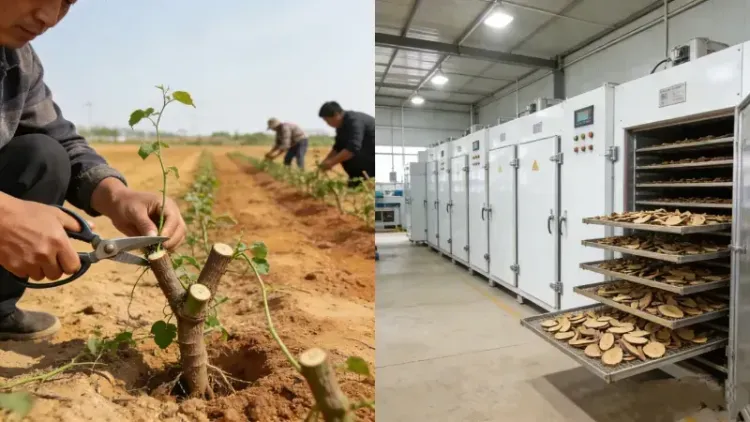
- Scientific Adaptation to Geography and Climate: Polygonum multiflorum has strong adaptability, thrives in warm climates and humid environments, tolerates shade, and is sensitive to drought. The genuine production areas are mostly located in subtropical humid climate zones, with an average annual temperature of 15-18°C, annual precipitation of 1000-1400 mm, and deep, loose, fertile, humus-rich sandy loam soil, which is particularly suitable for the climbing growth of its vines and the accumulation of active components.
- Scientific Management in Ecological Cultivation:
- Improved Variety Breeding: Production areas mostly use cutting propagation methods. In March or November each year, robust, mature one-year-old vines are selected and cut into cuttings with 2-3 nodes for propagation. This method yields a high survival rate and a short growth cycle.
- "Trellis Building and Branch Pruning" Shaping Technique: When the seedlings reach 30 cm in height, bamboo or wooden strips need to be inserted to form a trellis-like or tripod-like structure, around which the vines are twined in a clockwise direction. Only one main vine is retained per plant, and branching is only allowed above 1 meter to ensure ventilation and light penetration in the lower layers. If growth is too luxuriant, timely topping is necessary, with pruning 5-7 times per year to concentrate nutrients for vine stem growth.
- Soil Testing and Formula Fertilization: Base fertilizer primarily consists of decomposed organic fertilizer (3000 kg of mixed fertilizer per mu). Topdressing follows the principle of "organic fertilizer in the early stage, phosphorus and potassium fertilizer in the middle stage, and no fertilizer in the late stage." After September, when tuberous roots and vine stems begin to form, apply a heavy dose of 3000 kg of mixed stable manure and plant ash, combined with superphosphate and potassium chloride, to significantly increase the content of anthraquinone active components in the vine stems.
- "Property-Preserving" Harvesting and Processing Techniques: Vine stems with leaves are harvested in summer and autumn, or vines are harvested in autumn and winter. Residual leaves are removed, and the stems are tied into bundles, then dried in the sun or using drying methods. Modern processing employs low-temperature (≤50°C) circulating air drying technology, achieving uniform dehydration in a sealed environment. This results in vines with a purplish-red color and high retention rate of active components. Commercial products with thick, uniform branches and a brownish-red outer bark are considered superior.
III. Quality
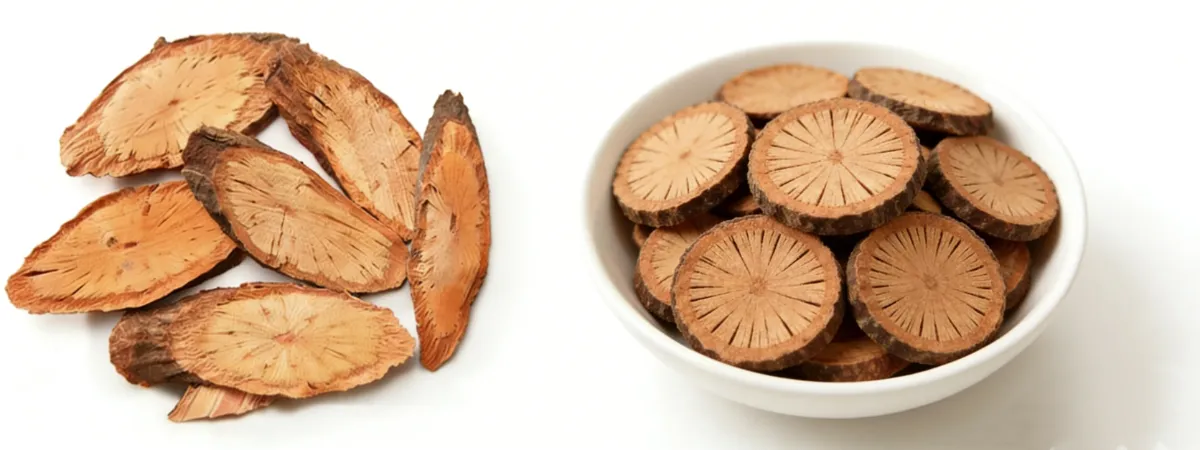
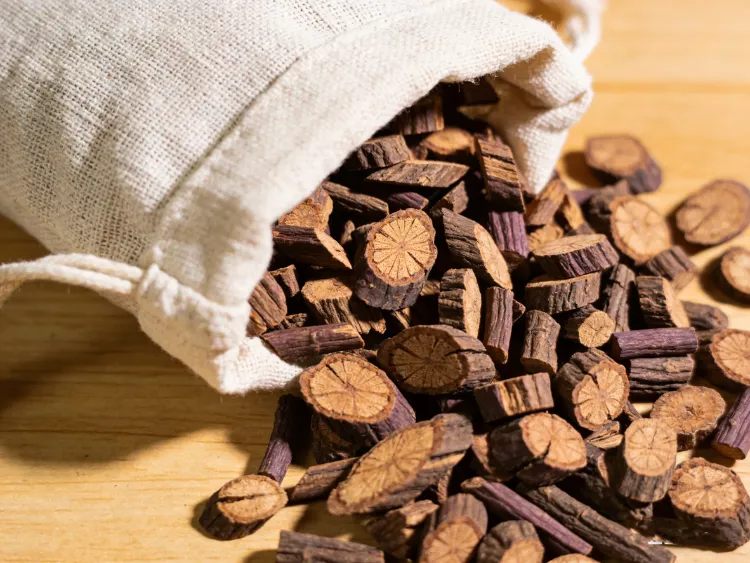
High-Quality Fleeceflower Vine: The vine stems are long cylindrical, slightly twisted, with a diameter of 4-7 mm. The surface is purplish-red to purplish-brown, featuring twisted longitudinal wrinkles and small, rounded lenticels. The nodes are slightly enlarged, with branch scars present. The outer bark is thin and can be peeled off. The texture is brittle and easily broken. The cross-section shows a purplish-red bark, a yellowish-white or light brown wood with distinct vessel pores, and a loose, white pith in the center. The odor is slight, and it is tasteless, with a mildly bitter and astringent taste. When steeped in hot water, the liquid turns light brownish-red, remains clear, and the vine segments absorb water, expanding without disintegrating.
Our herbal bath tea bags are all made from high-quality Tuber Fleeceflower Stem.
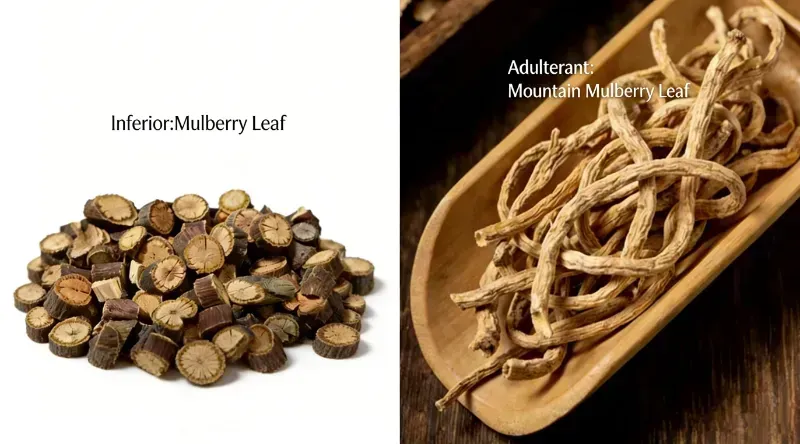
Ordinary / Inferior Fleeceflower Vine: The vine stems are thin and uneven in thickness, with a dull surface color (brownish-brown or blackish-brown). The wrinkles are shallow or absent, and the nodes are indistinct. Frequently, there are residual leaves or impurities present. The texture is light and spongy or dry and brittle, breaking easily. The cross-section has a dull color (dark brown or grayish-white), and the pith is indistinct or already decayed. The aroma is weak, or there may be a musty, sour (sulfur-fumigated), or smoky odor. After soaking, the liquid may be turbid or have an abnormal color, and the vine segments tend to disintegrate easily.
IV. Main Chemical Components
1.Anthraquinones: These are the primary characteristic active components of Fleeceflower Vine, including emodin, physcion, emodin-8-O-β-D-glucoside, and physcion-8-O-β-D-glucoside. Modern research has isolated and identified these four compounds through repeated silica gel column chromatography and Sephadex LH-20 gel column chromatography. Furthermore, improved sleep tests in mice have confirmed that emodin-8-O-β-D-glucoside possesses significant sleep-improving activity, establishing it as one of the core material bases for Fleeceflower Vine's mind-calming efficacy.
2.Flavonoids: Fleeceflower Vine is rich in various flavonoids. These components exhibit antioxidant, anti-inflammatory, and free radical scavenging effects, closely related to its function of "dispelling wind and unblocking collaterals."
3.Anthraquinone Glycosides: These include emodin-8-β-D-glucoside (also known as Fleeceflower Vine Acetylchrysophane A), among others. They possess pharmacological actions such as sedative and laxative effects.
4.Sterols: These contain β-sitosterol and others, providing synergistic anti-inflammatory and immunomodulatory effects.
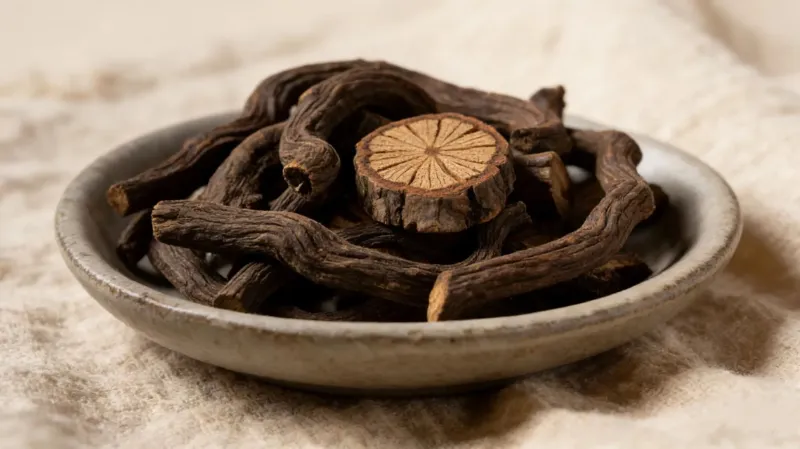
V. Core Efficacy
Fleeceflower Vine is neutral in nature, sweet and slightly bitter in taste, entering the Heart and Liver meridians. Its core efficacies are "nourishing the heart and calming the mind, dispelling wind and unblocking collaterals." It can "guide yang to enter yin," harmonizing yin and yang to promote sleep, while also dispelling wind from the skin to relieve itching and unblocking stagnant channels to alleviate pain. When applied externally through a "bath soak," its active components leverage the warmth of the water through dual pathways of skin absorption and steam inhalation, exerting its unique functions of "calming the mind and relieving itching, unblocking collaterals and relaxing sinews":Click here to get your exclusive bath soak.
Calming the Mind and Aiding Sleep, Relieving Emotional Stress:
It has a good regulating effect on insomnia, excessive dreaming, and restlessness caused by yin deficiency and blood insufficiency, able to "guide yang to enter yin" to promote peaceful sleep. Modern research has confirmed that emodin-8-O-β-D-glucoside in Fleeceflower Vine is one of the active components for improving sleep. During bathing, these active ingredients, absorbed through the skin and combined with the relaxing effect of the warm bath, can gently regulate the central nervous system, alleviating tension and anxiety. Clinically, Fleeceflower Vine is often combined with 2-3 qian each of Sour Jujube Seed, Albizia Bark, and Rose to formulate the "Sour Jujube Mind-Calming Bath Formula." Soaking in a bath for 15-30 minutes before sleep can calm the mind, soothe the spirit, and relieve stress.
Dispelling Wind and Relieving Itching, Improving Skin Pruritus:
It has significant therapeutic effects on skin itching, rubella, and eczema caused by blood deficiency generating wind and the skin losing nourishment. The Compendium of Materia Medica has long recorded its use: "For itching caused by wind sores, scabies, and tinea, decoct and use the water for bathing." According to Traditional Chinese Medicine, skin itching due to autumn dryness is often related to blood deficiency and yin deficiency—blood deficiency generates wind, and fluids cannot nourish the skin, resulting in itching. Fleeceflower Vine precisely nourishes blood, enriches yin, and dispels wind, treating both the root cause and symptoms. Specific usage: decoct 100 grams of Fleeceflower Vine to obtain the liquid, pour it into the bathtub for skin cleansing, once daily for half a month, with noticeable results. Its antibacterial and anti-inflammatory active components can inhibit pathogenic microorganisms on the skin surface, reduce inflammatory responses, and alleviate itching.
Dispelling Wind and Unblocking Collaterals, Relieving Rheumatic Pain:
It has good channel-unblocking and pain-relieving effects on rheumatic pain, skin numbness, and body pain due to blood deficiency. Fleeceflower Vine can "move through the channels and unblock the blood vessels." When used in a medicinal bath, its active components, absorbed through the skin and combined with the warming effect of the hot water, can promote local blood circulation, disperse wind-cold-dampness pathogens stagnating in muscles and joints, and alleviate limb soreness, pain, and numbness caused by rheumatism or strain.
Synergistic Combinations for Enhanced Mind-Calming:
In addition to the aforementioned "Sour Jujube Mind-Calming Bath Formula," Fleeceflower Vine can also be combined with 2-3 qian each of Poria with Hostwood, Lily Bulb, Polygala Root, and Rose to formulate the "Poria Mind-Calming Bath Formula." This can facilitate communication between the heart and kidneys, calm fright and stabilize the mind, improving sleep disturbances caused by restlessness, forgetfulness, and palpitations. Caution: Those with manic hyperactivity due to excess fire should use with care. The bath water temperature should not be too hot (38-42°C is appropriate), with a duration of 15-30 minutes. Individuals with cardiovascular diseases or skin wounds should avoid bathing.
Click here to see our adaptogen bath soak with Tuber Fleeceflower Stem.