I.Base Origin Information:
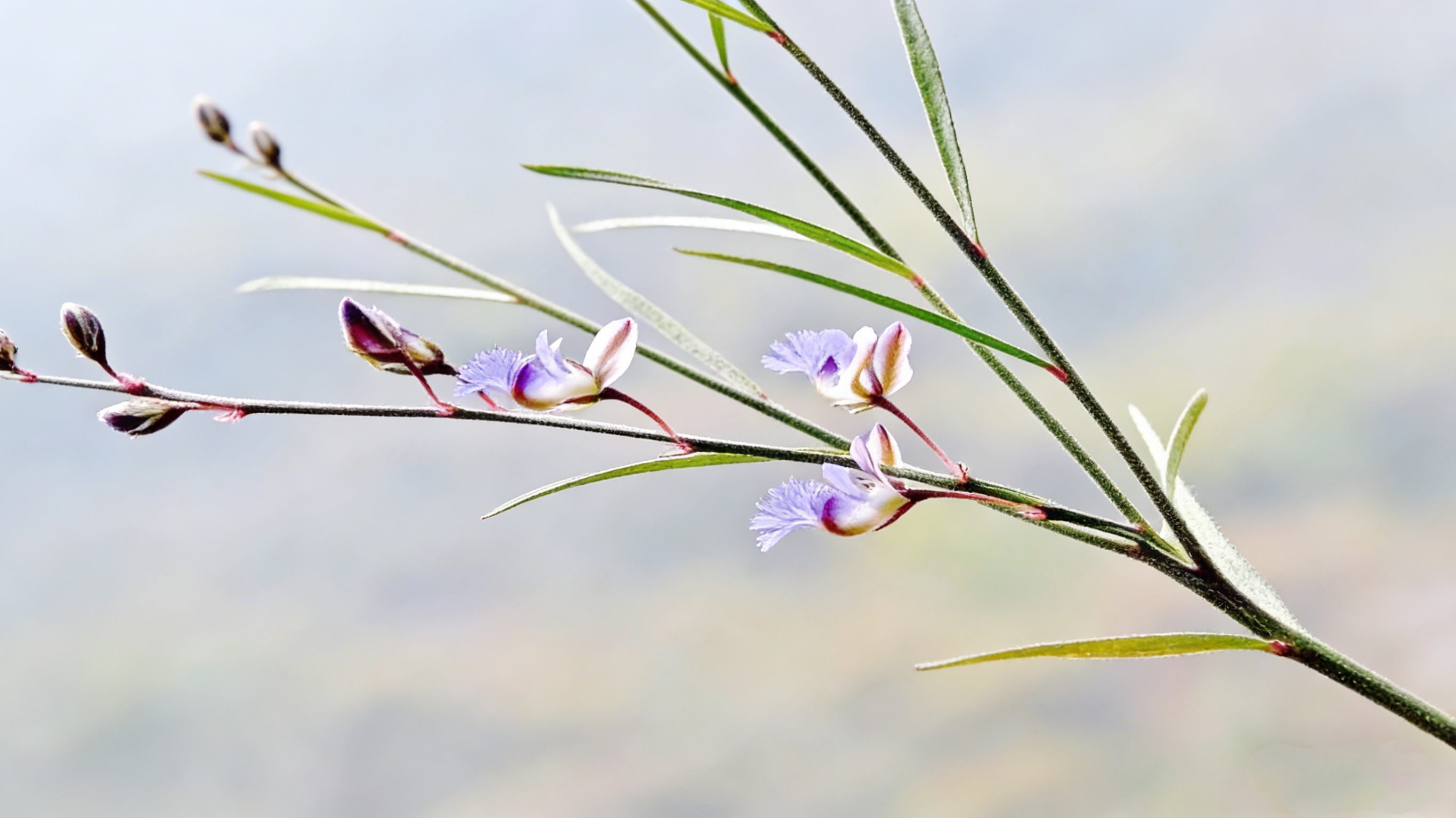
Thinleaf Milkwort Root, with the pharmaceutical Latin name POLYGALAE RADIX, is the dried root of Polygala tenuifolia Willd. or Polygala sibirica L., plants belonging to the Polygalaceae family. This seemingly slender root holds a unique position in the system of Traditional Chinese Medicine. Classified as a top-grade herb since the Shennong's Classic of the Materia Medica, it has long been renowned for its effects of "enhancing intelligence, calming the mind, dispelling phlegm, and reducing swelling." The name "Yuan Zhi" (literally "Far-reaching Aspiration") implies that taking it can broaden one's will and intellect, vividly reflecting its core efficacies of calming the heart, quieting the spirit, and benefiting intelligence by opening the orifices. Thinleaf Milkwort Root is bitter and acrid in taste, warm in nature, and enters the Heart, Kidney, and Lung meridians. Its functions include calming the mind and enhancing intelligence, facilitating communication between the heart and kidneys, dispelling phlegm and opening the orifices, and reducing carbuncles and swellings. It is particularly effective for treating insomnia, excessive dreaming, forgetfulness, and palpitations caused by disharmony between the heart and kidneys, as well as mental confusion and difficult expectoration due to phlegm obstructing the heart orifices. It is an essential herb in TCM for calming the mind, stabilizing the spirit, resolving phlegm, and opening the orifices.We have made Thinleaf Milkwort Root into traditional Chinese herbal bath tea bag to help you enhance wisdom and calm the mind.

II.Authentic Production Area:
Thinleaf Milkwort Root is widely distributed throughout China, with major production areas in provinces and regions such as Shanxi, Shaanxi, Hebei, and Henan. Among these, Shanxi Province is recognized as the authentic production region, and the Thinleaf Milkwort Root produced there has long been praised for its "high yield and excellent quality." High-quality traditional Chinese herbal bath tea bag will certainly choose raw materials from authentic cultivation areas of Chinese medicinal herbs.The unique natural conditions of these areas, combined with scientific cultivation management, collectively forge its exceptional medicinal properties:
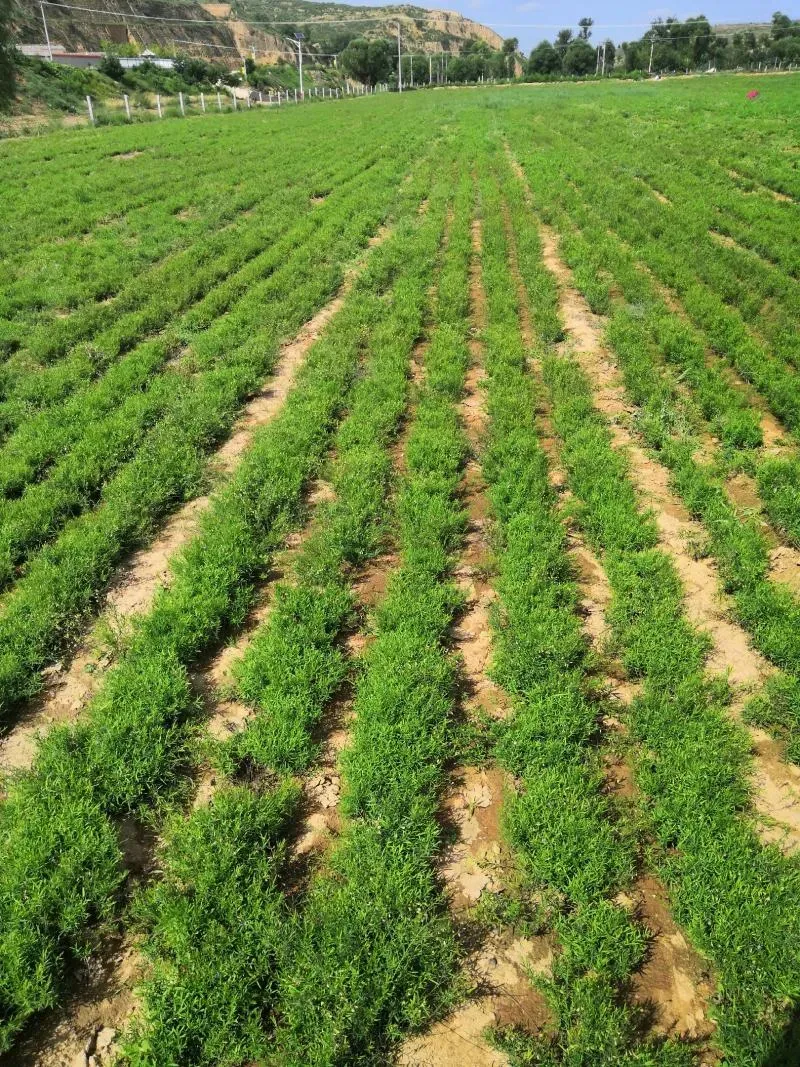
Scientific Adaptation to Geography and Climate: Thinleaf Milkwort Root prefers cool climates, is drought-tolerant and cold-resistant, but dislikes high temperatures and waterlogging. The authentic production region, Shanxi Province, is located in the eastern part of the Loess Plateau at an altitude of 800-1500 meters. It has an average annual temperature of 8-12°C, annual precipitation of 400-600 mm, abundant sunlight, and significant diurnal temperature variation. This environment, characterized by being "dry, cool, and with ample sunlight," is particularly suitable for the deep growth of its taproot and the accumulation of active components. The most suitable soil is well-drained sandy loam located in high, dry areas, while clay soil and low-lying wetlands are unsuitable for cultivation. Loose, well-aerated soil conditions are key to producing roots that are thick and long, with plump bark and a high content of active ingredients.
Technological Innovations in Ecological Cultivation:
1."Deep Plowing to Break the Plow Pan" Technique: Thinleaf Milkwort Root is a deep-rooted plant, with roots capable of penetrating over 1 meter deep. Before sowing, deep plowing is essential to break the plow pan. A cultivation method of "turning over the topsoil (living soil) and loosening the subsoil (dead soil) below" is adopted to create a loose soil environment for deep root penetration.
2.Superior Variety Breeding and Germplasm Resource Protection: In response to the shift of Thinleaf Milkwort Root from primarily wild to primarily cultivated sources, production areas have established germplasm resource evaluation systems and carry out breeding programs for superior varieties to protect authentic seed sources. Research indicates significant differences in the content of saponin components among different germplasm resources, making superior variety breeding key to enhancing medicinal material quality.
3.Cultivation Management Based on "Sun-Loving and Drought-Tolerant" Characteristics: Thinleaf Milkwort Root is a sun-loving plant and should be cultivated on sunny, south-facing slopes. During the growth period, water application is strictly controlled, as it dislikes waterlogging and is prone to root rot under flooded conditions. Production areas promote "dryland water-saving cultivation" using techniques such as plastic film mulching and inter-tillage for moisture conservation. This approach not only satisfies its drought-tolerant characteristics but also promotes the accumulation of secondary metabolites in the root system.
4.Green Prevention and Control and Crop Rotation Systems: To address diseases to which Thinleaf Milkwort Root is susceptible, such as root rot and leaf blight, integrated measures are employed, including agricultural control (rational crop rotation, field cleaning), physical control (yellow sticky traps), and biological control, with strict limitations on pesticide use. A rotation system of more than three years is implemented, and continuous cropping is avoided to maintain soil ecological balance.
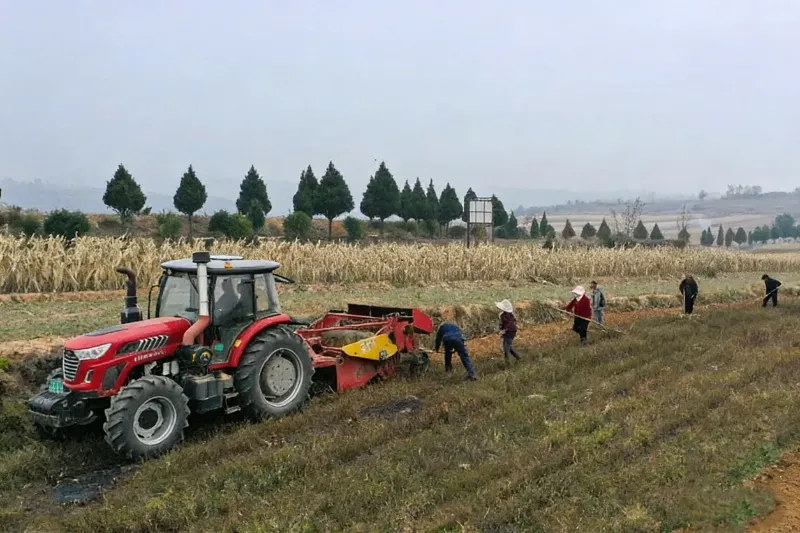
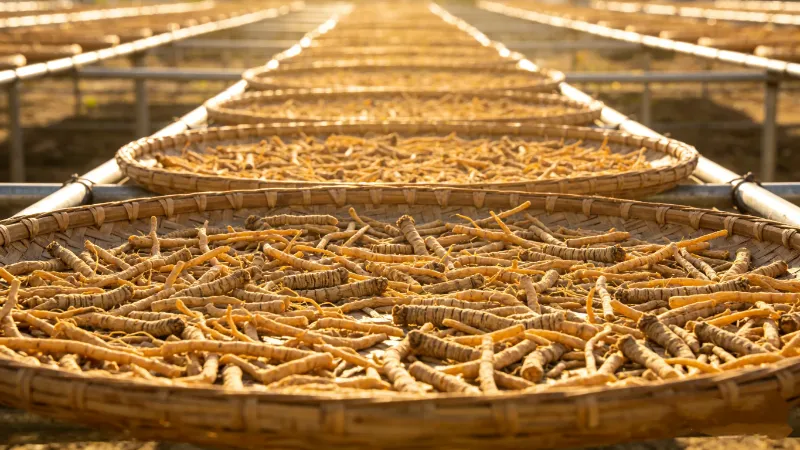
"Nature-Preserving" Harvesting and Processing Techniques: After 3-4 years of cultivation, harvesting occurs in spring and autumn. Fibrous roots and soil are removed, and the roots are dried in the sun to obtain "Thinleaf Milkwort Root Tubes" (Yuan Zhi Tong). In traditional processing, thicker roots are selected, and the woody core (xylem) is removed, using only the bark for medicinal purposes, which is called "Yuan Zhi Tong" (bark cylinders). Thinner roots, from which the woody core is not removed, are called "Yuan Zhi Gun" (root sticks). Modern research shows significant differences in the content of active components between the bark and the woody core of Thinleaf Milkwort Root; the traditional practice of removing the core ensures medicinal efficacy. Processed Thinleaf Milkwort Root (Zhi Yuan Zhi) requires preparation with Licorice Root water to moderate its bitter and drying nature, thereby enhancing its effects of calming the mind and benefiting intelligence.
III. Quality
 Click here to see our adaptogen bath soak with Thinleaf Milkwort Root.
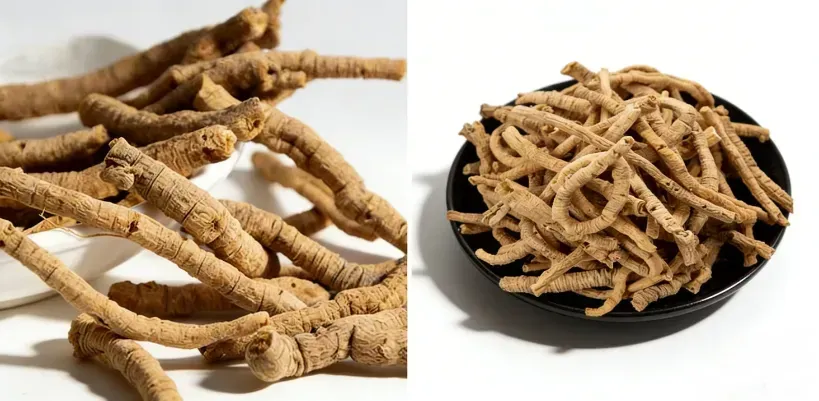
High-Quality Thinleaf Milkwort Root: The root is cylindrical in shape, thick and uniform. The surface is greyish-yellow or greyish-brown, featuring dense, deeply depressed transverse wrinkles (a distinct "earthworm head" appearance). The bark is thick and plump, with the woody core completely removed, presenting a tubular form ("Thinleaf Milkwort Root cylinder"). The texture is brittle and easily broken. The cross-section shows a yellowish-white bark area that is flat and slightly starchy; the woody core is small and has been removed, resulting in a hollow, tubular cavity. The odor is slight, and the taste is bitter and slightly acrid, with a throat-irritating sensation upon chewing (indicative of saponin components). When steeped in hot water, the liquid turns pale yellowish-brown, remains clear, and produces small bubbles (due to the foaming property of saponins). The root segments absorb water and expand without disintegrating.
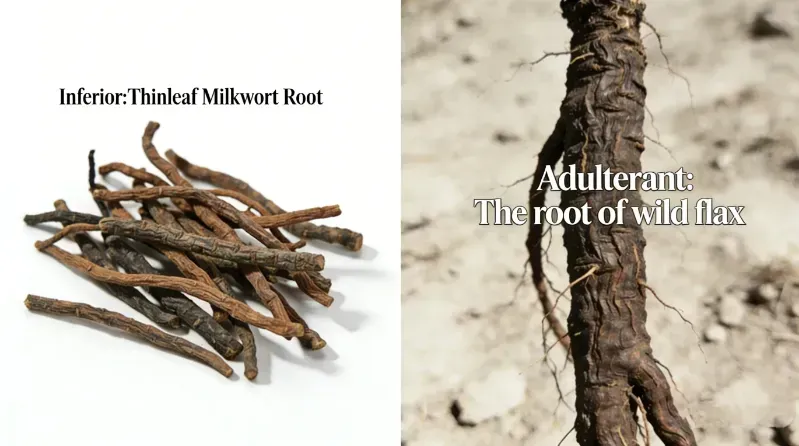
Ordinary / Inferior Thinleaf Milkwort Root: The roots are thin, slender, and uneven in thickness. The surface color is dull (brownish-brown or blackish-brown), with shallow or absent transverse wrinkles. The woody core is either not removed or largely retained, resulting in a semi-cylindrical or stick-like form ("Yuan Zhi Gun" / Thinleaf Milkwort Root sticks). The texture is light and spongy or dry and brittle. The cross-section has a dull color (dark brown or grayish-white). The woody core is thick or present, lacking the hollow sensation. The aroma is weak, or there may be a musty or sour (sulfur-fumigated) odor. The taste is bland or excessively bitter and astringent. After soaking, the liquid may be turbid or have an abnormal color, with few or no bubbles. The root segments tend to disintegrate easily.View more introductions to Chinese medicinal herbs.
IV. Main Chemical Components
1.Saponins: These are the most important and characteristic active components of Thinleaf Milkwort Root. Their aglycones are all oleanane-type triterpenes, with sugars including glucose, rhamnose, xylose, apiose, and galactose. Main representatives include tenuifolin and polygalasaponins. Saponins possess various pharmacological activities such as sedative and mind-calming effects, anti-dementia properties, brain protection, and expectorant and antitussive effects. They are the core material basis for its functions of "calming the mind and enhancing intelligence" and "dispelling phlegm and opening the orifices."
2.Xanthones: These are one of the characteristic components of plants in the Polygala genus, including dozens of compounds such as polygalaxanthone III, polygalaxanthone V, 1,7-dihydroxyxanthone, and mangiferin. Research has confirmed that components like polygalaxanthone III show significant content variation among different grades of Thinleaf Milkwort Root and possess biological activities such as antidepressant, antioxidant, and anti-tumor effects.
3.Sugar Esters: These mainly include 3,6'-disinapoyl sucrose, tenuifoliside A, sibiricose A5, and sibiricose A6. These components are important active substances responsible for Thinleaf Milkwort Root's anti-dementia, brain-protective, and neurological function-regulating effects. They also serve as characteristic differential components for distinguishing various grades of Thinleaf Milkwort Root.
4.Oligosaccharide Polyesters: Plants in the Polygala genus are rich in oligosaccharide polyester components, which have effects such as enhancing intelligence, anti-aging, and immunomodulation.
5.Flavonoids: These include various flavonoids and flavonoid glycosides such as isorhamnetin, quercetin, kaempferol, and rutin. They provide synergistic antioxidant, anti-inflammatory, and cardioprotective and cerebroprotective effects.
V. Core Efficacy
Thinleaf Milkwort Root is warm in nature, bitter and acrid in taste, entering the Heart, Kidney, and Lung meridians. Its core efficacies are "calming the mind and enhancing intelligence, facilitating communication between the heart and kidneys, dispelling phlegm and opening the orifices, and reducing carbuncles and swellings." Its bitter, acrid, and warm nature enables it to open the heart orifices upward to enhance intelligence and connect with kidney qi downward to strengthen willpower, making it an essential herb for "facilitating communication between the heart and kidneys." When applied externally through a "adaptogen bath soak," its active components leverage the warmth of the water through dual pathways of skin absorption and steam inhalation, exerting its unique functions of "calming the mind, relieving constraint, and soothing the body and mind":
Calming the Mind and Aiding Sleep, Facilitating Communication Between the Heart and Kidneys:
It has an excellent regulating effect on insomnia, excessive dreaming, forgetfulness, palpitations, and restlessness caused by disharmony between the heart and kidneys, able to "facilitate communication between the heart and kidneys" to promote peaceful sleep. Thinleaf Milkwort Root is an important component of classic calming foot bath formulas. In commonly used clinical formulas for calming the mind and aiding sleep, Thinleaf Milkwort Root is combined with herbs such as Albizia Flower and Fleeceflower Vine, exerting effects of calming the mind, enhancing intelligence, relieving constraint, and quieting the spirit through foot baths. During bathing, the saponin and xanthone active components of Thinleaf Milkwort Root, absorbed through the skin and combined with the relaxing effect of the warm bath, can gently regulate the central nervous system, alleviating tension and anxiety. For those experiencing difficulty falling asleep due to work pressure and mental stress, a medicated bath with Thinleaf Milkwort Root can play a role in "facilitating communication between the heart and kidneys and guiding yang to enter yin."
Dispelling Phlegm and Opening the Orifices, Soothing the Head and Eyes:
It offers auxiliary relief for mental confusion, forgetfulness, and difficult expectoration caused by phlegm obstructing the heart orifices. Thinleaf Milkwort Root has the function of dispelling phlegm and opening the orifices. Its active components, absorbed through steam inhalation, can assist in unblocking lung qi, resolving phlegm, and opening the orifices. For individuals with phlegm-dampness constitution accompanied by a feeling of heaviness in the head, chest fullness, and excessive phlegm, a medicated bath can provide a gentle regulating effect.
Reducing Carbuncles and Swellings, Aiding Skin Health:
It offers auxiliary relief for sores, carbuncles, toxic swellings, and breast distension and pain. Thinleaf Milkwort Root can "reduce carbuncles and swellings." Its antibacterial and anti-inflammatory active components, absorbed through the skin, can gently inhibit pathogenic microorganisms on the skin surface, providing auxiliary regulating effects for mild skin inflammation and folliculitis.
FAQ:
How to use adaptogen bath soak without a bathtub?
You may switch to targeted and local herbal baths, such as foot baths. The soles of the feet are densely packed with acupoints and reflex zones corresponding to various organs and systems throughout the body. Stimulating these areas can promote overall wellness. Foot baths are simple, convenient, and only one-third of sachet is consumed and needed while delivering comparable benefits. Hence foot bath is highly recommended.
Can the adaptogen bath soak be used for foot bath?
Every herbal bath bag can be used for foot baths. As mentioned, the soles of the feet are densely packed with acupoints and reflex zones corresponding to various organs and systems throughout the body. Stimulating these areas can promote overall wellness. Foot baths are simple, convenient, and only one-third of sachet is consumed and needed while delivering comparable benefits. Hence foot bath is highly recommended.
Will the bath tea bag dirty the bathtub?
Natural herbs may release plant pigments (such as pale yellow and light brown). This is a normal phenomenon and usually, the bath water and ordinary bath cleaner can easily remove them after the bath.
However, try to avoid the medicinal liquid coming into contact with light-colored towels and clothes as much as possible.