I.Base Origin Information:
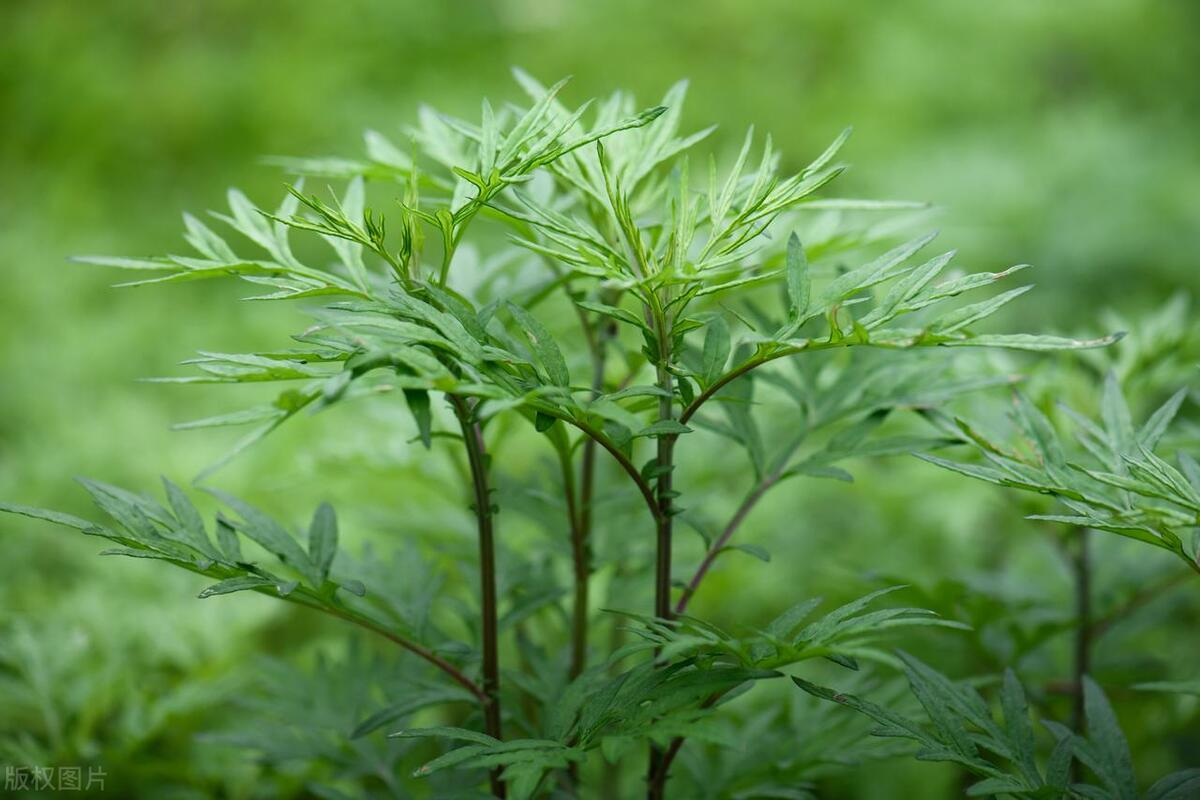
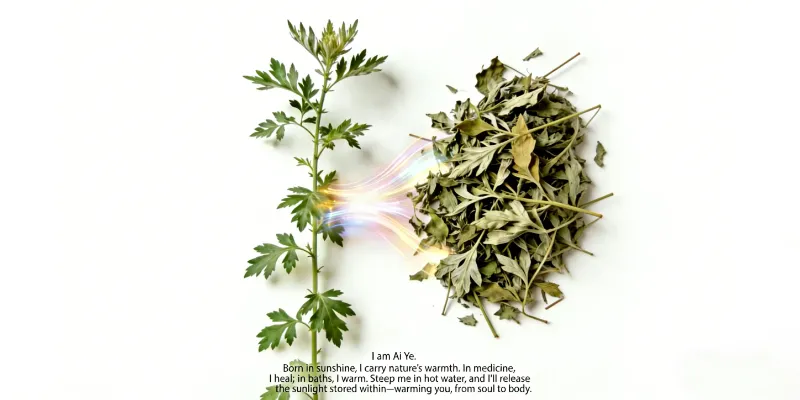
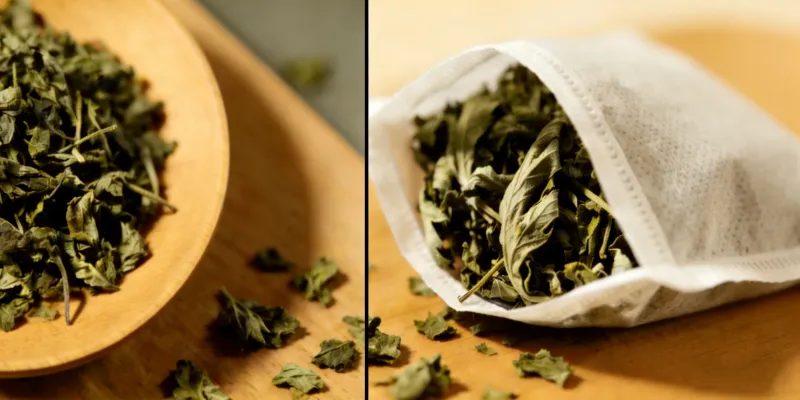
Argy Wormwood Leaf, with the Latin name ARTEMISIAE ARGYI FOLIUM, is the dried leaf of Artemisia argyi H. Lév. & Vaniot, a plant belonging to the Asteraceae family. This seemingly ordinary herb is actually one of the longest-used and most widely applied medicinal materials in the treasure house of traditional Chinese medicine, holding the reputation of being the "medical herb" and "moxibustion herb." Since its inclusion in the Mingyi Bie Lu (Miscellaneous Records of Famous Physicians), it has been classified as a middle-grade herb. The character "Ai" (艾) in its name is an ancient Chinese homophone for "乂" (yì), meaning to govern and stabilize, implying its ability to regulate qi and blood and stabilize the viscera. Argy Wormwood Leaf embodies the nature of pure yang, adept at dispelling cold-damp and warming the meridians. It is an essential herb for "warming the meridians to stop bleeding and dispersing cold to alleviate pain," suitable for both internal and external use. Notably, due to its characteristic of "curing a hundred diseases through moxibustion," it is revered as the "king of a hundred herbs."It is also the core raw material of our adaptogen herbal bath tea bag for daily wellness bathing.
II. Authentic Production Area:
Argy Wormwood Leaf from Qichun, Hubei Province, China, is recognized as the authentic medicinal material, forming the core production areas for Argy Wormwood Leaf alongside Nanyang in Henan, Anguo in Hebei, and Ningbo in Zhejiang. Among these, Qichun in Hubei, leveraging its unique geographical advantages and cutting-edge cultivation technology, has become the benchmark for Argy Wormwood Leaf quality:
- Scientific Adaptation to Geography and Climate: Argy Wormwood Leaf thrives in warm, humid climates and has strong adaptability. The authentic production area of Qichun, Hubei, is located in the eastern part of the Jianghan Plain at 30° north latitude, featuring a subtropical monsoon climate. With an average annual temperature of 16-17°C and annual precipitation of 1300-1500 mm, it experiences abundant rainfall in spring and early summer. These climatic characteristics have given rise to specific cultivation requirements—the "narrow ridge, wide furrow" planting model. Addressing Qichun's rainy conditions and heavy soil texture, this field design employs narrow ridges (40-50 cm wide) and wide furrows (20-30 cm deep), significantly enhancing drainage capacity, improving soil aeration, promoting early spring ground temperature increase, and ensuring uniform emergence of Argy Wormwood seedlings while preventing root rot caused by waterlogging. This agronomic innovation not only substantially reduces seed root usage but also effectively controls field density, suppresses weed growth, and creates conditions for green pest management and mechanized harvesting.

- Technological Breakthroughs in Superior Variety Breeding: Addressing the challenge of soil degradation in old Argy Wormwood fields, research teams have developed soil improvement techniques based on fertility testing, including "deep plowing after 3-4 years of planting + increased application of organic fertilizer, calcium-magnesium-phosphate fertilizer + crop rotation with corn." Simultaneously, superior new varieties such as "Qihuang No. 1" and "Qiqing No. 1" have been selectively bred. These varieties feature robust Argy Wormwood roots, high germination rates, vigorous plant growth, and significant advantages in yield and quality. In superior variety breeding bases, following the provincial system's technical regulations for Argy Wormwood Leaf breeding and utilizing Argy Wormwood root harvesting machinery (capable of excavating 2-3 mu per hour), a yield of 1200 kg of high-quality Argy Wormwood roots per mu has been achieved. Moreover, new Argy Wormwood fields require only 70 kg of seed roots for sowing, saving approximately half the amount compared to traditional methods.
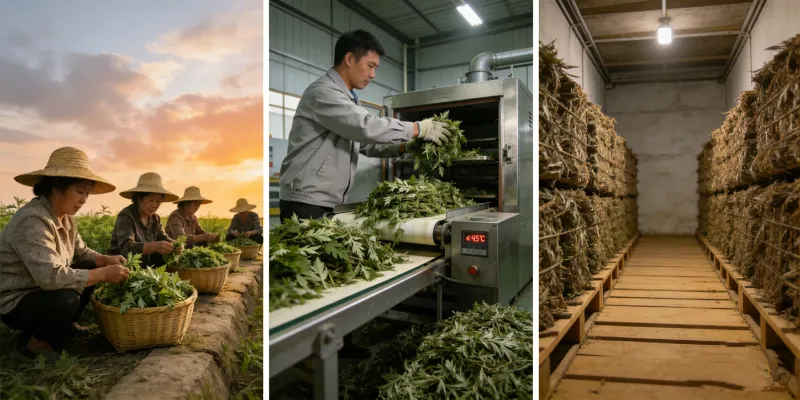
- The Art of "Timely" Harvesting and Processing: The optimal harvest period for Argy Wormwood Leaf is summer, before flowers bloom (around June). At this time, the leaves are thick, the volatile oil content is high, and the medicinal potency is sufficient. Harvesting too early results in insufficient potency, while harvesting too late leads to loss of aroma. After harvesting, impurities must be promptly removed, and the leaves dried in the sun or using low-temperature (≤45°C) drying methods. Modern research has found that storage time significantly affects the quality of Argy Wormwood Leaf—moderate aging can reduce its harsh and drying nature, but improper or excessive storage leads to volatilization and loss of active components. High-quality Argy Wormwood Leaf is typically stored in light-protected, low-temperature, dry warehouses to maximize retention of its characteristic "pure fragrance."
III. Quality
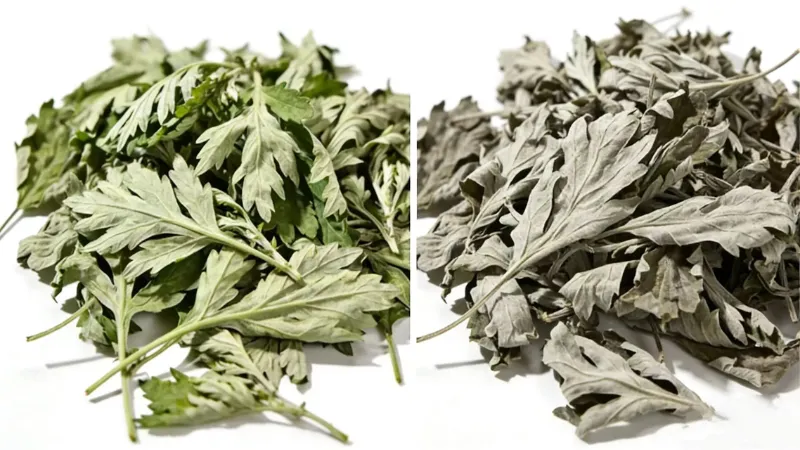
High-quality Argy Wormwood Leaf: The leaves are mostly wrinkled, curled, and fragmented. When a complete leaf is flattened, it appears ovate-elliptical in shape, with pinnatifid lobes that are elliptical-lanceolate and irregular coarse serrations along the margins. The upper surface is greyish-green or deep yellowish-green, sparsely covered with fine hairs and glandular dots. The lower surface is densely covered with greyish-white tomentum (thick, dense tomentum is a hallmark of superior quality). The texture is soft and pliable. It has a distinct, rich, and pure fragrance (indicative of high volatile oil content) and a bitter taste. When rubbed by hand, the aroma diffuses intensely, and it feels oily to the touch. When steeped in hot water, the liquid turns a pale yellowish-green, remains clear, and releases its characteristic aroma. When ignited (simulating moxibustion), the smoke is elegant and non-irritating, and the resulting ash is greyish-white and cohesive, not easily dispersing.
Inferior: Argy Wormwood Leaf Adulterant: Artemisia mongolica leaf
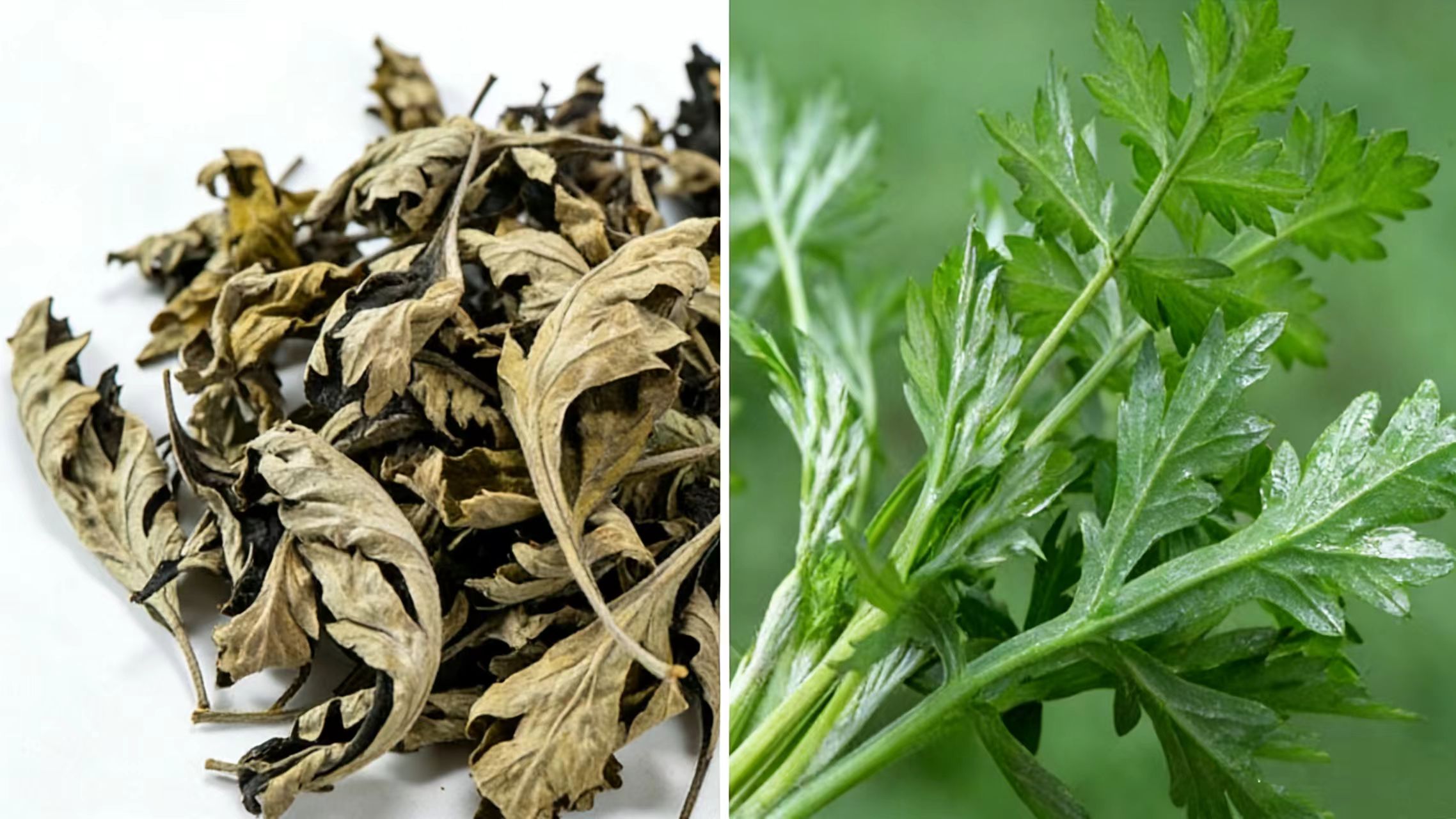
Ordinary/InferiorArgy Wormwood Leaf: The leaves have a dull coloration (yellowish-brown or blackish-brown) and sparse tomentum. They may be mixed with a significant amount of stems (adulterated by "ground Artemisia stems"), peanut shells, or other impurities. The texture is dry, brittle, and easily broken. The aroma is weak, or there may be a moldy, rancid, or smoky odor. Common adulterants, such as the leaves of Artemisia mongolica, exhibit significant differences in the peak area ratio of eucalyptol to chamazulene compared to the authentic species. After steeping, the liquid may appear turbid or have an abnormal color. When ignited, the smoke is harsh and irritating to the eyes and nose, and the ash is black and scattered.
IV. Main Chemical Components
1.Volatile Oil Complex: This constitutes the core active components of Argy Wormwood Leaf, with content reaching 0.45%-1.00%. Dozens of compounds have been isolated from it, including eucalyptol (1,8-cineole), camphor, borneol, α-thujone, citronellol, and β-caryophyllene. Among these, eucalyptol is the indicator component for content determination specified in the Chinese Pharmacopoeia (not less than 0.050%), and its specific ratio to chamazulene is a key indicator for authenticity identification. The volatile oil is the primary material basis for Argy Wormwood Leaf's antibacterial, antiviral, antitussive, antiasthmatic, and antiallergic effects.
2.Flavonoids: Various flavonoids and flavonols have been isolated, including eupatilin, jaceosidin, apigenin, kaempferol, luteolin, and quercetin. These components possess potent antioxidant, anti-inflammatory, and estrogen-like effects, closely related to Argy Wormwood Leaf's functions of "warming the meridians to stop bleeding" and "regulating menstruation to calm the fetus."
3.Triterpenoids and Eudesmanes: These include α- and β-amyrin, friedelin, lupenone, and various eudesmanolides. They contribute synergistic anti-inflammatory, hepatoprotective, and sedative effects.
V. Core Efficacy
Argy Wormwood Leaf is warm in nature, acrid and bitter in taste, with mild toxicity, entering the Liver, Spleen, and Kidney meridians. Its core efficacies are "warming the meridians to stop bleeding, dispersing cold to alleviate pain; for external use, dispelling dampness and relieving itching." Argy Wormwood Leaf embodies pure yang nature, excelling at penetrating the Three Yin Meridians, expelling all cold-dampness, and transforming the killing and searing qi into harmony. When applied externally through a "bath soak," its pure yang nature leverages the warmth of the water to penetrate the skin and striae, exerting its unique functions of "expelling cold and dampness, unblocking collaterals, and relieving itching."
- Expelling Cold and Dampness, Alleviating Joint Pain and Cold Sensations:
It provides significant relief for joint pain and cold sensations, muscle stiffness, soreness in the lower back and knees caused by wind-cold-dampness, as well as "old cold legs" due to cold-dampness accumulation. The volatile, pure yang active components of Argy Wormwood Leaf are released more rapidly in hot water (40-42°C). Through transdermal absorption, they can deeply disperse cold-dampness adhering to the sinews, bones, and joints, promoting local qi and blood circulation. For lower back pain that commonly occurs during the rainy season (often related to kidney deficiency or invasion by wind-cold-dampness), applying a warm compress with Argy Wormwood Leaf or taking an Argy Wormwood Leaf medicated bath can quickly alleviate soreness and pain. To make it more convenient and hygienic for you to use mugwort leaves, we have produced special adaptogen herbal bath tea bag made from high‑quality mugwort. For details, please visit our product page to learn more.
- Warming the Meridians and Dispersing Cold, Regulating Female Discomfort:
It has an excellent warming and regulating effect on dysmenorrhea, irregular menstruation, and lower abdominal pain and cold sensations caused by uterine cold. The heat of the medicated bath synergizes with Argy Wormwood Leaf's property of warming the meridians. Through local absorption by the skin of the lower back and abdomen, it can warm the uterus, promote pelvic blood circulation, and alleviate menstrual abdominal pain due to cold congealing and blood stasis. For postpartum women, bathing with Argy Wormwood Leaf is also a traditional health preservation wisdom, commonly used to warm the meridians, disperse cold, and prevent "confinement illnesses."
- Dispersing the Lungs and Expelling Cold, Aiding Wind-Cold Common Cold:
It clears the lungs and disperses cold, providing auxiliary relief for wind-cold colds.It has an auxiliary diaphoretic effect for the early stage of wind-cold cold, marked by aversion to cold, headache, nasal congestion and cough.Argy Wormwood Leaf warms the middle energizer and dispels cold.The volatile oils it contains, after being absorbed by the human body, also exert antitussive, anti-asthmatic and expectorant effects.During bathing, its pungent-warm and diffusing ingredients penetrate the skin and are inhaled as trace steam, helping to dredge the interstices, dispel wind-cold from the superficial muscles, and relieve cold discomfort.It is especially suitable for the auxiliary conditioning of wind-cold cold in children.
Click for more product details.
FAQ
- How often should bath adaptogen be used?
For targeted conditioning caring and healing- Perform once a day for a total of 10 days, or perform every other dayfor 10 consecutive times, "This constitutes a short-term cvcle. If vour body feel comfortable after one short time.another 1~2 short term is suggested for more steady effcacy.
For daily health care -2~3 times a week is sufficient.
- Is there a universal adaptogen recipe suitable for whole family bath?
The following products are recommended for family use or shared baths.